Training guide
Muay Thai for Beginners: What to Learn During Your First Month
Use your first month of Muay Thai to learn stance, guard, balance, basic weapons, defense, pad etiquette, and controlled conditioning.
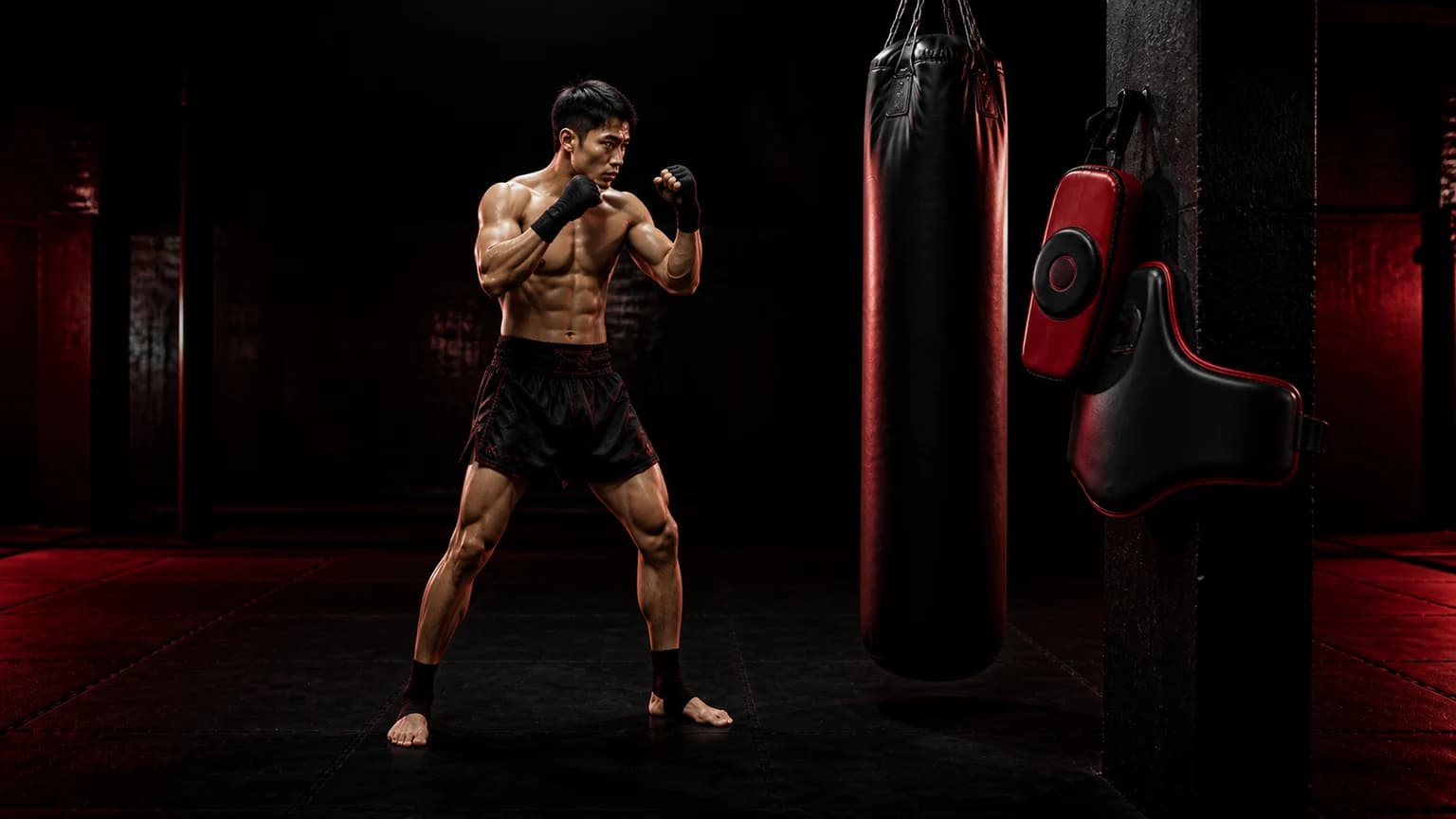
Muay Thai AI: Kru Coach helps you review one filmed technique and track a specific training question. During your first month, focus on stance, guard, balance, basic weapons, defense, pad etiquette, and controlled conditioning. Build those foundations before you chase speed, power, long combinations, or hard sparring.
Your first-month priorities
| Week | Main focus | Progression check |
|---|---|---|
| 1 | Stance, guard, movement | You can step, pivot, and stop without crossing your feet |
| 2 | Jab, cross, teep, round kick | You can finish each strike with your base and guard recovered |
| 3 | Checks, covers, parries, and exits | You can defend, regain position, and avoid standing square |
| 4 | Pad combinations and conditioning | You can follow the caller, breathe, and keep technique under controlled fatigue |
Muay Thai uses punches, kicks, knees, and elbows, but beginners should not treat every weapon as a target for immediate hard contact. Your coach should decide which techniques fit your experience, equipment, partner, and class intensity.
Step 1: Build a stable stance and guard
Stand with enough width to move in every direction without locking your knees. Keep your feet available for striking and checking rather than placing your weight permanently on one leg. Your hands should protect your head while your elbows help protect your body.
Practice stepping forward, backward, and laterally. After every step, pause briefly and check three things: your feet remain organized, your chest does not lean excessively, and your hands return to guard. Do not add combinations until you can repeat this position without chasing your balance.
Your gym may teach a stance that reflects its lineage, coaching style, or competition rules. Learn the version your coach can correct in person rather than trying to force a universal template.
Step 2: Learn basic weapons without losing position
Start with the jab, cross, lead teep, rear teep, and round kick. Learn the intended target, hip and shoulder action, recovery path, and defensive responsibility for each weapon. A strike does not finish when it reaches the target. It finishes when you return safely to a usable stance.
For punches, keep your non-striking hand responsible for defense. For teeps, recover the foot instead of leaving it extended. For round kicks, learn how your gym manages distance, balance, and partner safety before increasing force.
The IFMA Muaythai rules describe competition techniques and conduct, but class drills, novice bouts, age categories, and local promotions can apply different limits. Confirm the current rule set with your federation, event organizer, and coach.
Step 3: Pair every attack with a defense
Learn one defensive answer beside each new attack. After a jab, practice returning to guard and moving away from the center. After a kick, practice recovering your stance and preparing to check or counter. Add parries, covers, checks, and simple exits only when your coach can control the drill.
Defense should not mean freezing behind a high guard. You need to see, breathe, maintain balance, and remain ready to move. Keep the drill slow enough to recognize the incoming line and the correct response.
Step 4: Follow pad etiquette and control conditioning
Ask the pad holder what combination, target, rhythm, and intensity they want before you begin. Listen for the caller’s final cue, stop when they stop, and do not add surprise strikes. Wear the equipment your gym requires and respect the agreed contact level.
Conditioning should support skill rather than hide technical breakdown. Use manageable rounds, recover between efforts, and keep enough control to protect your joints and training partner. Do not begin maximal lifting, aggressive weight changes, or specialized impact conditioning without qualified in-person guidance.
A practical first-month session
- Warm up with light movement and the mobility work your coach assigns.
- Rehearse stance, guard, and footwork at low speed.
- Drill one or two weapons with clear recovery positions.
- Add the matching defensive response.
- Perform short pad rounds at the agreed intensity.
- Review one filmed attempt and write one observable correction.
- Cool down, record the session, and ask your coach what to repeat next time.
Keep one variable stable while you test another. If you change stance, speed, combination, and power simultaneously, you will not know which change affected your balance.
Common beginner mistakes
Chasing power
New students often lean, overrotate, or drop their guard to hit harder. Reduce the speed, shorten the combination, and recover your stance after every strike before adding force.
Standing square after a kick
A poor recovery leaves both feet vulnerable and makes the next defense late. Practice returning the kicking leg to a position that lets you check, move, or strike again.
Treating pads like a fight
Pad work has a caller, a holder, and a planned rhythm. Throwing extra shots can surprise the holder and create unsafe contact. Follow the sequence exactly until your coach changes it.
Hard sparring too soon
Sparring demands distance control, defense, emotional control, and partner awareness. Ask your coach when you are ready, then start with the intensity and constraints they set. Never use pain, dizziness, numbness, or fear of injury as a test of readiness. Stop and seek qualified help.
What video review can and cannot decide
Video can help you inspect visible guard position, foot placement, balance recovery, sequence, and timing. It cannot diagnose pain, measure internal effort, judge what happened outside the frame, or replace a coach’s live correction.
Use Muay Thai AI: Kru Coach after a comparable filmed attempt. Ask it to identify the earliest visible breakdown, then test one correction in your next round. The app can support video-based observation, but it cannot decide whether you should spar, increase contact, enter an event, attempt a submission, lift maximally, change weight, or continue through pain.
Combination practice
Use the Muay Thai combination generator to create a starting combination for practice. It can organize attack sequences and training inputs. It cannot choose a safe intensity, account for your injury history, verify your gym’s rules, or replace your coach’s decision about contact and readiness.
Frequently asked questions
Do I need a belt or rank goal in month one?
No universal belt sequence applies across Muay Thai gyms. Learn the skills and standards your school actually teaches.
Should beginners train elbows and knees?
Learn them only within your coach’s controlled drills and equipment rules. Their use can differ by class, age group, gym, and event.
How often should I spar?
Follow your coach’s progression. Many beginners can develop timing through technical drills and light partner work before they need harder sparring.
What if a technique causes pain?
Stop immediately. Do not film more repetitions to prove a point. Ask a qualified coach or appropriate medical professional for in-person guidance.