Technique
Muay Thai Roundhouse Kick: Pivot, Hip Rotation, Guard, and Recovery
Learn the Muay Thai roundhouse through supporting-foot pivot, hip rotation, shin path, guard and recovery, then review controlled pad reps on video.
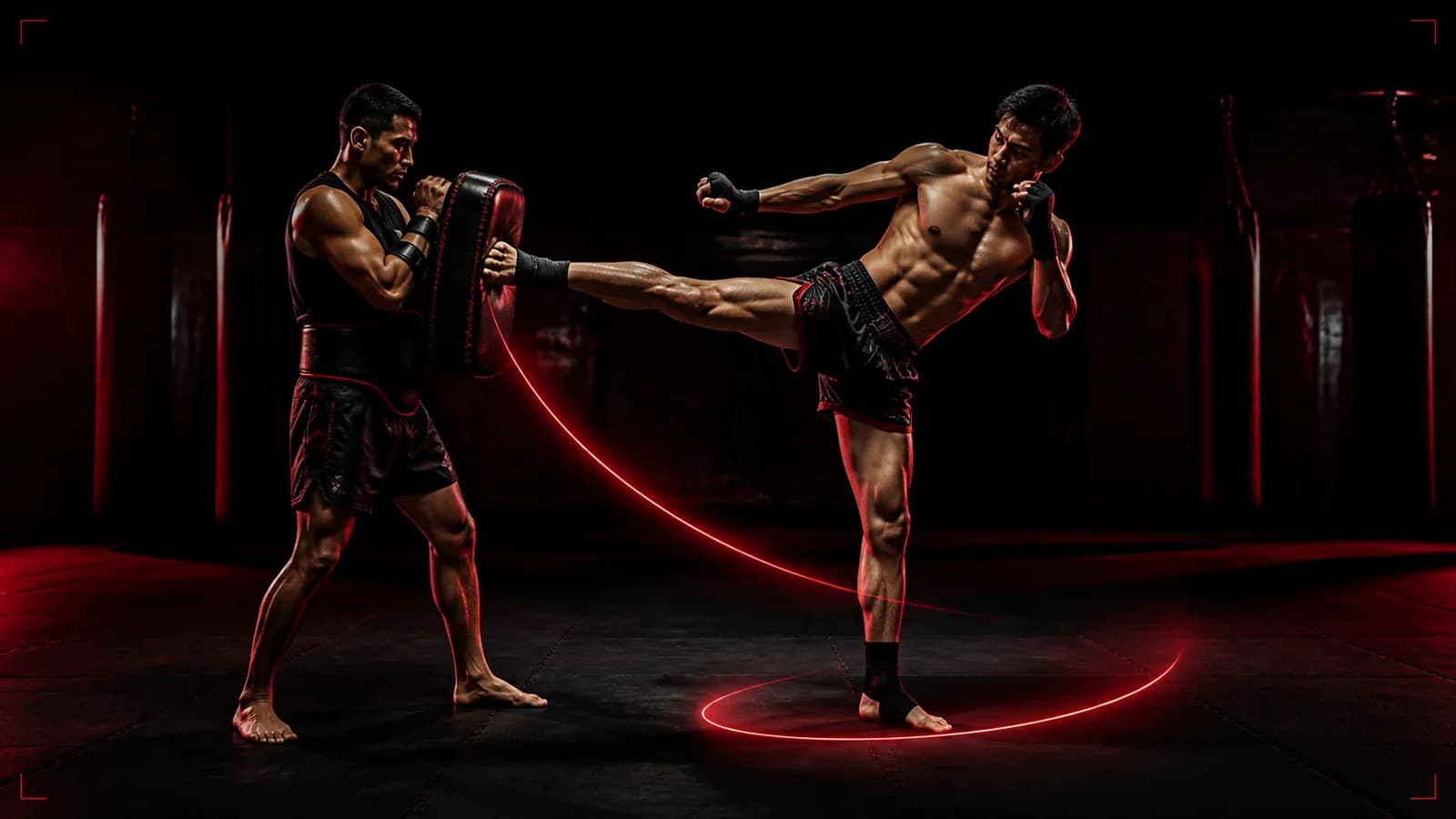
Build the Muay Thai roundhouse kick by stepping or setting the base, pivoting the supporting foot, rotating the hip so the shin travels through the target, protecting the head and recovering into a stance you can use. Learn the path on pads with a qualified trainer before you add power or live timing.
Set the range before the kick
Stand close enough that the lower shin can reach the pad after rotation. If you start too far away, you may lean, reach with the foot or hop into an unstable base. If you start too close, the knee or upper shin may collide before the hip turns.
Ask the pad holder to set a consistent target and brace with a stable stance. Agree on the number and intensity of kicks. Do not ask a partner to absorb hard kicks without appropriate equipment and experience.
Pivot the supporting foot
Turn on the ball of the supporting foot and let the heel open away from the target. Keep the knee soft. The pivot gives the pelvis room to rotate and allows the kicking hip to travel through rather than stopping square.
The pivot and hip turn should connect. Spinning the foot early without moving the hip leaves you twisted. Throwing the leg before the foot turns can load the knee and shorten the path.
Rotate the hip through the target
Think of the shin as following the hip. Turn the pelvis and let the kicking leg travel in an arc. Your torso may counterbalance, but keep enough posture to see the target and recover.
Use the contact surface your trainer teaches for the target and drill. Pad work often uses the shin; different tactical kicks may use other surfaces. Do not harden the shin through unsafe impact routines.
Give each hand a job
Keep the opposite hand near the face. The kicking-side arm may swing to counterbalance according to your gym's system, but it should not pull both hands away from protection. Keep the chin organized and eyes on the target.
Practise the arms slowly without power. When the kick speeds up, the pattern you rehearsed is the one most likely to remain.
Recover deliberately
After contact, choose the recovery your drill requires:
- return the kicking leg to the original stance;
- step through into the opposite stance;
- place the foot for the next knee, punch or defensive action.
Do not let the pad decide where you land. A complete repetition ends when you regain a stable position.
Use a technical progression
- Pivot and replace the foot without kicking.
- Add a slow hip turn with the knee bent.
- Touch the pad lightly and recover.
- Increase speed while the guard and base remain visible.
- Add power only with a trainer who can hold safely.
- Add combinations after the single kick remains repeatable.
Fix visible errors
| What happens | Review first |
|---|---|
| Kick lands with the foot at the end of range | Starting distance and hip travel |
| Supporting heel stays forward | Pivot timing |
| Torso falls away | Target height and base width |
| Both hands drop | Slow the rep and assign the opposite hand to guard |
| You stumble after contact | Recovery choice and pad distance |
Stop if you feel pain, dizziness or symptoms that concern you. A video cannot determine whether a joint or tissue is safe to train.
Review the kick in Muay Thai AI: Kru Coach
Place the phone outside the pad lane at hip height and a front-oblique angle. Keep the supporting foot, hips, hands, pad and landing visible. Record the same target and intensity across several reps.
Open Muay Thai AI: Kru Coach and compare pivot timing, hip rotation, guard and recovery. Use Coach Somchai's feedback to select one cue for the next round, then confirm it with your trainer. The app cannot feel contact quality, judge pain or replace a pad holder who can correct distance in person.
Your next pad round
Use a short set of technically matched kicks. Review one clip, choose one visible correction and repeat at the same intensity. Stop the round before fatigue turns the pivot, guard or landing into a different movement.