
Training
How to Review Muay Thai Training Video with an App
Use a repeatable Muay Thai video-review workflow: record one clear angle, find the first visible change, save one training note, and take uncertain decisions to your coach.
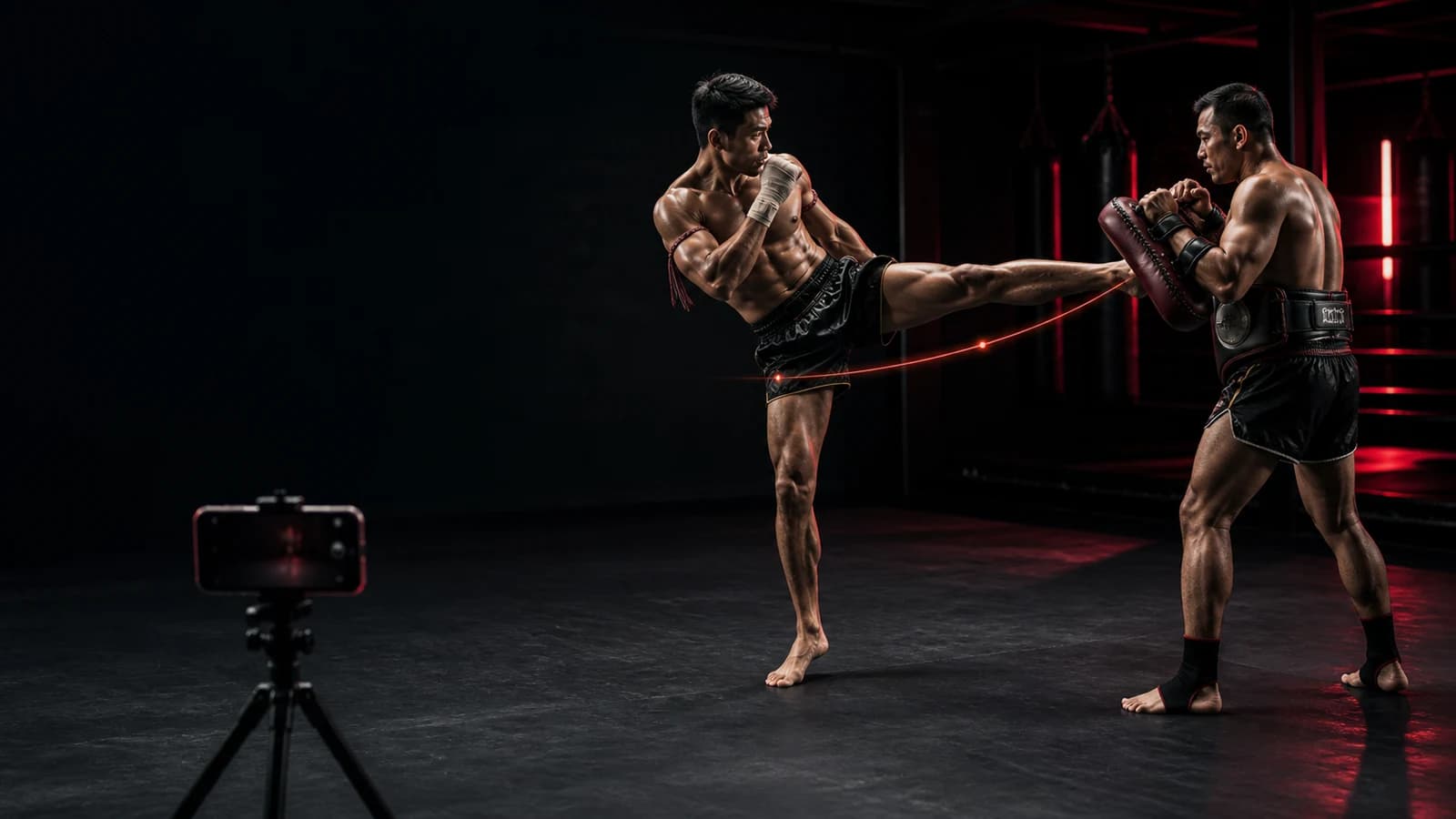
Answer first: Use a Muay Thai video-analysis app to answer one small training question at a time. Record a short, repeatable sequence from an angle that shows your full stance, watch it once at normal speed, find the first visible moment that changes, and save one observation for the next round. Let a qualified coach decide questions that depend on contact, pain, tactics, rules or your partner's intent.
Start with a question the camera can answer
“Was that good?” is too broad. A useful review question names one action and one visible checkpoint. You might ask whether you recovered your stance after a teep, stayed square to the pads during a combination, returned your guard after a knee, or kept your posture during a light clinch entry. The camera can show position, timing and sequence from its angle. It cannot feel impact, know what your partner intended or diagnose why something hurt.
Write the question before you record. That stops you from searching a clip for every possible fault and changing several things at once. Keep the round, target, partner role and intensity similar when you want to compare attempts. A short set of comparable repetitions usually tells you more than a highlight assembled from different sessions.
Record a usable Muay Thai angle
Put the phone on a stable tripod or fixed surface outside the working area. Use normal video unless your coach needs slow motion for a specific moment. Keep the camera far enough away to show both feet, your guard and the target. Bright, even light helps more than an artistic angle.
Choose the view for the question:
- Side view: useful for weight shift, balance, hip position, teep recovery and distance from a bag or pad holder.
- Front or rear three-quarter view: useful for stance width, guard position, checks, rotation and whether you return square after an exchange.
- Wide partner view: useful for controlled clinch or sparring when you need to see both people, the starting distance and the reset.
Ask everyone visible in the recording for permission. Follow your gym's filming rules, and avoid capturing children, bystanders, private conversations or identifying details that do not belong in the review. Check the app's current privacy information before you upload any footage.
Review the clip in four passes
First, watch the complete attempt at normal speed without pausing. You need the rhythm and decision that led into the action. Second, watch for the earliest visible change, not the final ugly position. A lost stance often begins a step earlier than the missed strike. Third, write one neutral observation such as “I planted my lead foot before I turned” or “I did not regain my stance before the next pad call.” Do not turn an angle into a diagnosis. Fourth, choose one smaller repetition you can test under the same conditions.
Compare like with like. A fresh pad round and a tired sparring exchange answer different questions. So do a heavy bag and a moving partner. Tag or describe the session clearly enough that you remember the context: pads, bag work, clinch, sparring or roadwork; round number; side; intended technique; and the one change you tested.
Use feedback as a prompt, not a verdict
Automated technique feedback can help you notice a possible checkpoint, but it cannot see the whole training environment. Treat the output as a prompt for your next observation. Check whether the suggested issue appears in more than one comparable attempt. If it does, simplify the drill and show the clip to your coach. If it does not, keep the original question instead of chasing a new cue after every repetition.
This boundary matters most in clinch, sparring and competition preparation. Camera angle, fatigue, protective equipment, event rules and a partner's reaction can change what a movement means. Stop the review and ask a qualified person when you feel pain, when contact becomes unsafe, or when the answer depends on the rules of your event.
Build a review loop that changes training
A useful app should shorten the path from recording to the next deliberate repetition. Try this loop:
- Name one visible checkpoint before the round.
- Record three to five comparable attempts.
- Watch one complete attempt at normal speed.
- Find the first repeatable difference.
- Save one observation in the training log.
- Ask your coach when the interpretation depends on contact, safety or tactics.
- Repeat the same small test before you add a new correction.
For pad rounds, you might compare your stance before and after a fixed combination. On the bag, you might compare the distance at which a teep lands without leaning. In clinch, film only with your partner's permission and use a wide angle that keeps both people visible. In sparring, let your coach choose what you record and how you use it. For roadwork, the log can record the session, but a striking video question does not become useful merely because you attach it to a run.
Decide whether you need a specialist app
Use a specialist video-review app when you want the recording, the technique note and the next training entry connected. A basic camera may be enough when you only need to replay a clip with your coach. A simple journal may fit when you never review footage. If you want to compare the wider category first, read the current Muay Thai app comparison.
Before you choose, confirm the current device requirements, regional availability, subscription terms and privacy label in your local App Store. Do not assume an old review still describes the current product. The page you can use today matters more than a feature list copied from an earlier version.
Safety and rules
Video review should not increase contact or persuade you to repeat a painful movement. Agree the drill, target, intensity and permitted counters before recording partner work. Stop for pain, dizziness or an unsafe exchange and seek appropriate in-person help. For competition preparation, check the rules from your event organiser and national federation. The International Federation of Muaythai Associations provides an international starting point, but the rules that govern your actual event take priority.