Technique
Muay Thai Switch Kick: Stance Change, Turn, Contact, and Return
Learn a controlled Muay Thai switch kick, keep the stance change compact, film the full action, and correct one visible phase at a time.
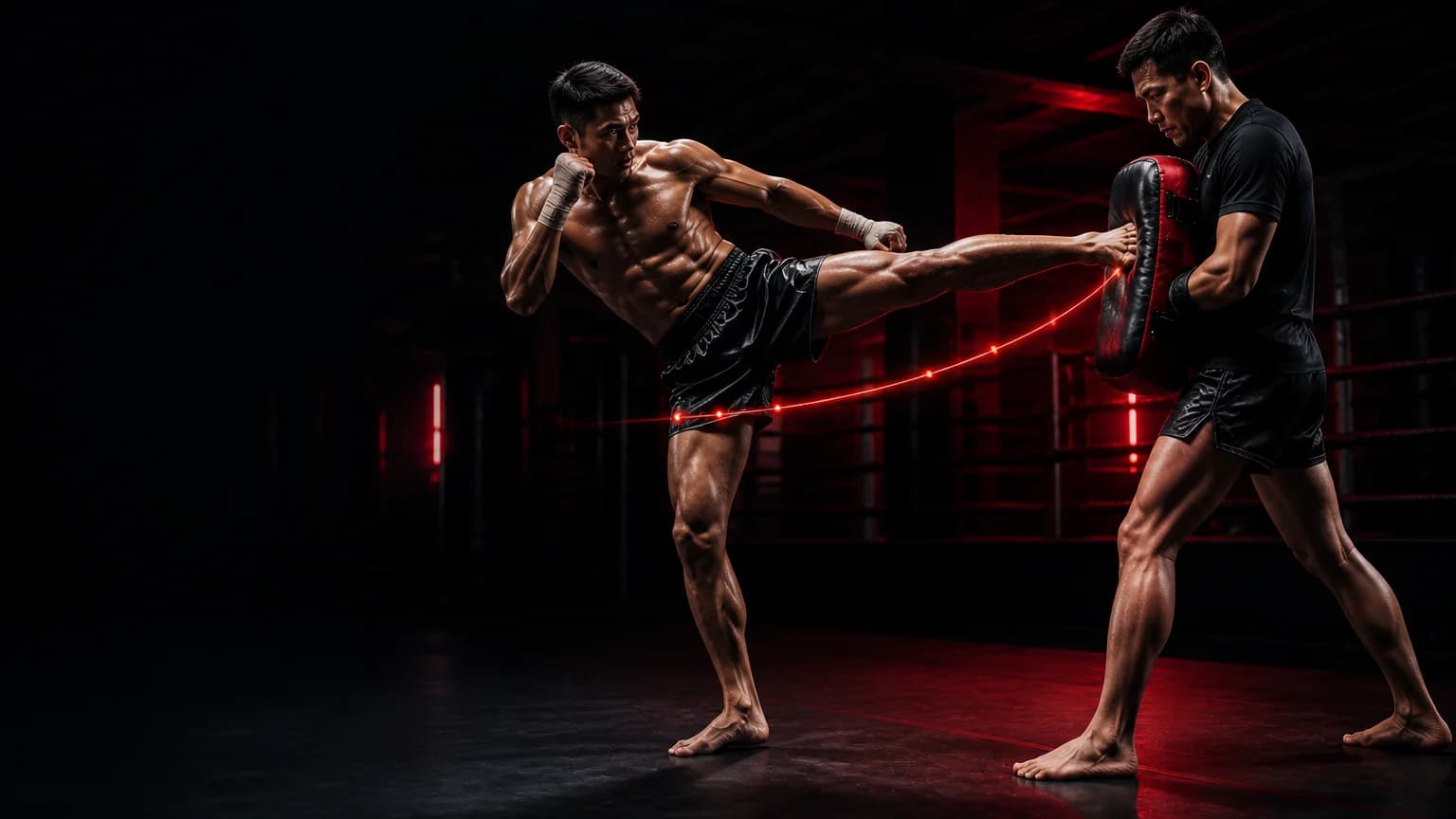
A Muay Thai switch kick uses a quick stance change to load the lead-side round kick without a large step or obvious pause. You switch the feet, turn through the support leg and pelvis, send the kick through the chosen target, and return to a stance that lets you defend or continue. The switch should create timing and position. It should not leave your feet crossed or your body square before the kick begins.
Learn the kick with a qualified Muay Thai coach and a suitable pad holder. Begin below full speed and power. Do not strike another person outside agreed, supervised practice.
Define the version first
Coaches use “switch kick” for related but different movements. Clarify:
- whether you begin orthodox or southpaw;
- whether you switch in place, step slightly, or hop;
- whether the target is leg, body, arm, or head pad;
- which part of the shin or foot your gym expects to meet the pad;
- whether you return to the original stance or land forward;
- which hand action and guard belong to the drill.
You cannot compare two repetitions fairly when the intended version changes.
Review six phases
| Phase | What you do | What the clip should show |
|---|---|---|
| Start | Hold a balanced fighting stance | Feet, guard, and distance match across attempts |
| Switch | Exchange or reposition the feet compactly | No crossing, excessive height, or long pause |
| Load | Accept pressure into the new support side | You stay able to see and defend |
| Turn | Rotate toward the target | Support foot and pelvis move together under control |
| Contact | Meet the intended pad line | Target remains inside controlled range |
| Return | Recoil or continue into the planned stance | Guard and balance support the next action |
Keep the switch small
Move only enough to create the stance and pressure your coach wants. A high hop makes the action easy to read and can delay the kick. Crossing the feet removes your base.
Practise the switch without kicking. Freeze after the feet land and check whether you can move in every direction. If you need an extra adjustment before you can kick, reduce the switch.
Turn from the new support side
After the switch, rotate through the support foot and pelvis as your coach teaches. Do not throw the kicking leg while the rest of the body remains behind. Do not force the support knee through pain or twist against a planted foot.
A laboratory comparison of expert roundhouse kicks found that practitioners across Muay Thai, karate, and taekwondo shared several movement features while also showing discipline-specific differences. The study supports careful phase review, not one universal kick shape: read the study.
Meet the pad at controlled distance
Set the pad so you can reach it after the switch without leaning or chasing. The holder should know the target, height, power, and combination before the repetition begins.
Aim through the intended line while keeping enough control to stop or reduce force if the holder changes position. Do not use a rigid object to condition the shin. Pain and tissue damage do not prove better technique.
Return ready to act
Complete the recoil and landing. Your gym may ask you to return to the original stance, land forward, or continue a combination. Whichever version you practise, finish with your eyes up, your guard available, and your feet able to move.
Film two useful angles
Use a side-oblique angle to see the switch length, distance, torso position, target contact, and landing. Use a front-oblique angle to review foot crossing, support-foot turn, guard, and balance.
Keep the entire support foot and kicking leg in frame. Record the start and return, not only the pad contact.
Fix the first visible error
| What you see | What to test |
|---|---|
| Switch rises too high | Practise a quieter foot exchange without the kick |
| Feet cross | Mark both landing positions and slow the switch |
| Kick pauses after the switch | Reduce the switch and link the pressure change to the turn |
| Torso leans away | Lower or move the pad and retest the range |
| Support foot stays fixed | Practise the turn without impact under coaching |
| You cannot defend after landing | Finish each repetition in the planned guard and stance |
Use a controlled progression
- Switch and freeze in stance.
- Switch, turn, and return without a target.
- Touch a low pad with minimal force.
- Raise speed only while the stance remains compact.
- Add one entry or follow-up.
- Use the kick in supervised sparring when your coach approves.
Review Muay Thai stance, roundhouse kick technique, and leg-kick checks to connect attack and defense.
Stop if you feel sharp pain, joint instability, dizziness, or loss of control. A video cannot diagnose an injury or determine whether you should continue training.