Technique
Muay Thai Knee Strikes: Straight, Curved, and Clinch Knees
Learn the main Muay Thai knee families, posture, support-foot pressure, hip action, legal targets, and safe pad drills.
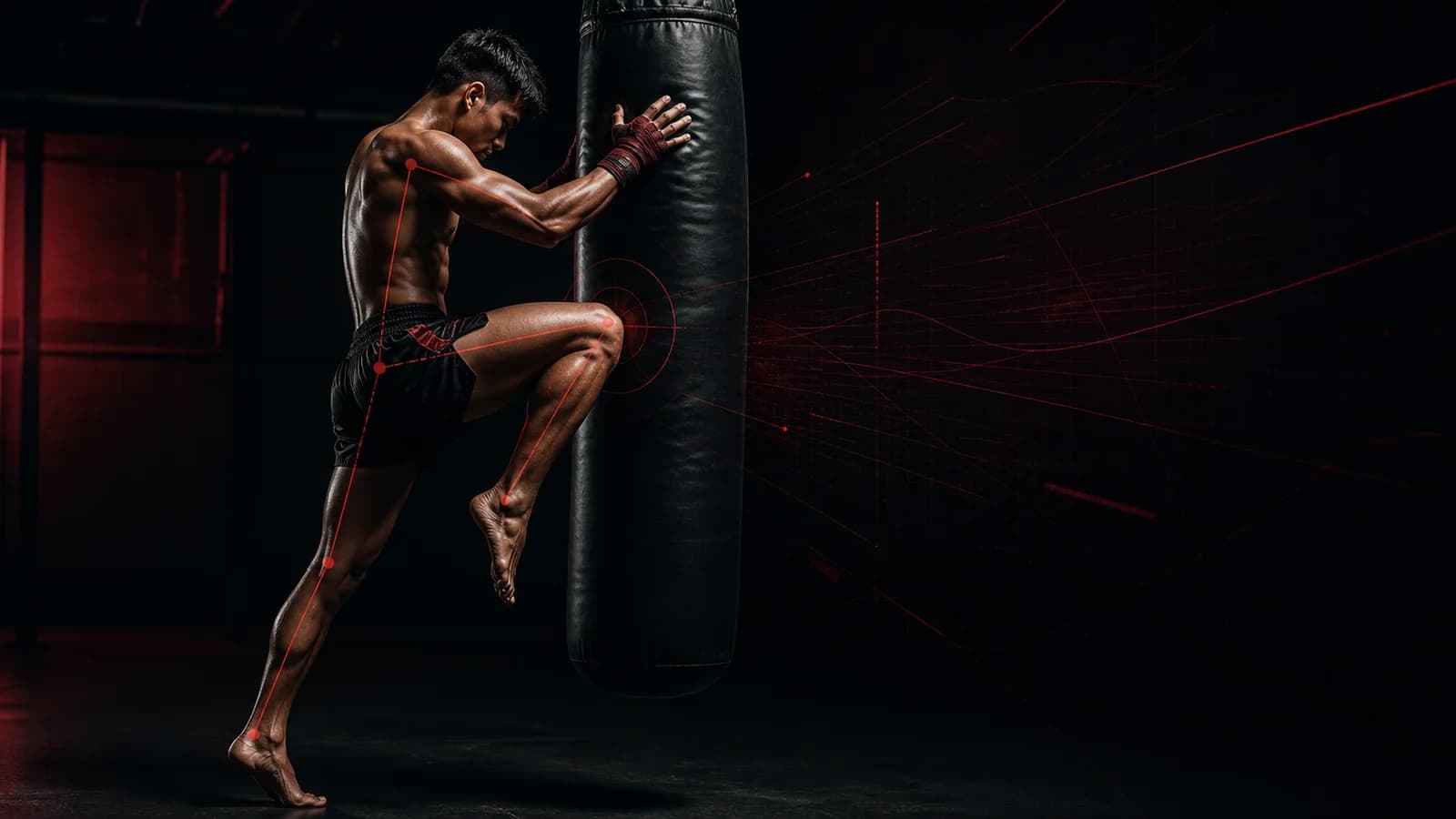
Muay Thai uses several knee paths. A straight knee drives forward through the target, a curved knee travels around the side, and clinch knees combine posture and control with repeated short attacks. In every version, stay tall, drive from the floor and hip, protect your head, and recover your stance before the next action.
Learn knees on a heavy bag or pads with a qualified coach. Rules and legal targets vary by event, age, and class. Never practise uncontrolled knees on a partner.
Straight knee
From stance, lift the heel of the support foot and drive the striking hip forward. Fold the lower leg so the knee becomes the leading point. Keep the trunk tall enough that you do not fall away from the target.
On a heavy bag, place the hands in a coached long guard or clinch frame. Contact with the hard front of the knee, not the kneecap sliding upward. Return the foot to stance under control.
Curved knee
The curved knee travels around the target rather than straight through it. Turn the support foot and hip to create the arc, then bring the knee toward the side of the pad or bag.
Do not swing only the lower leg. The hip should carry the knee. Reduce the arc if the support knee twists or you lose balance.
Clinch knees
Clinch knees start with posture and hand position. Keep your spine organised, control the partner or bag according to your coach’s drill, and make space without pulling the head into an unsafe line.
Alternate knees only when you can replace the striking foot and rebuild balance. Rapid knees that leave both feet crossing or the chest collapsing do not create useful practice.
| Checkpoint | Useful cue | Common error |
|---|---|---|
| Support foot | Heel light, pivot available | Foot glued while the knee twists |
| Hip | Drives the knee | Torso leans away |
| Hands | Guard or coached frame | Both hands drop |
| Contact | Pad or bag receives the knee | Toes or shin arrive first |
| Recovery | Foot returns to stance | Leg falls across the body |
A three-round bag session
Round one: single straight knees with a complete reset. Round two: alternate knees while keeping the head height stable. Round three: mix straight and curved knees only when your coach has taught both paths.
Use moderate power. Stop the round when posture changes or the support foot begins to stick.