Technique
Muay Thai Elbow Techniques: Paths, Guards, and Pad Drills
Learn the main Muay Thai elbow paths, how to keep your guard, and how to practise each strike safely on pads with a coach.
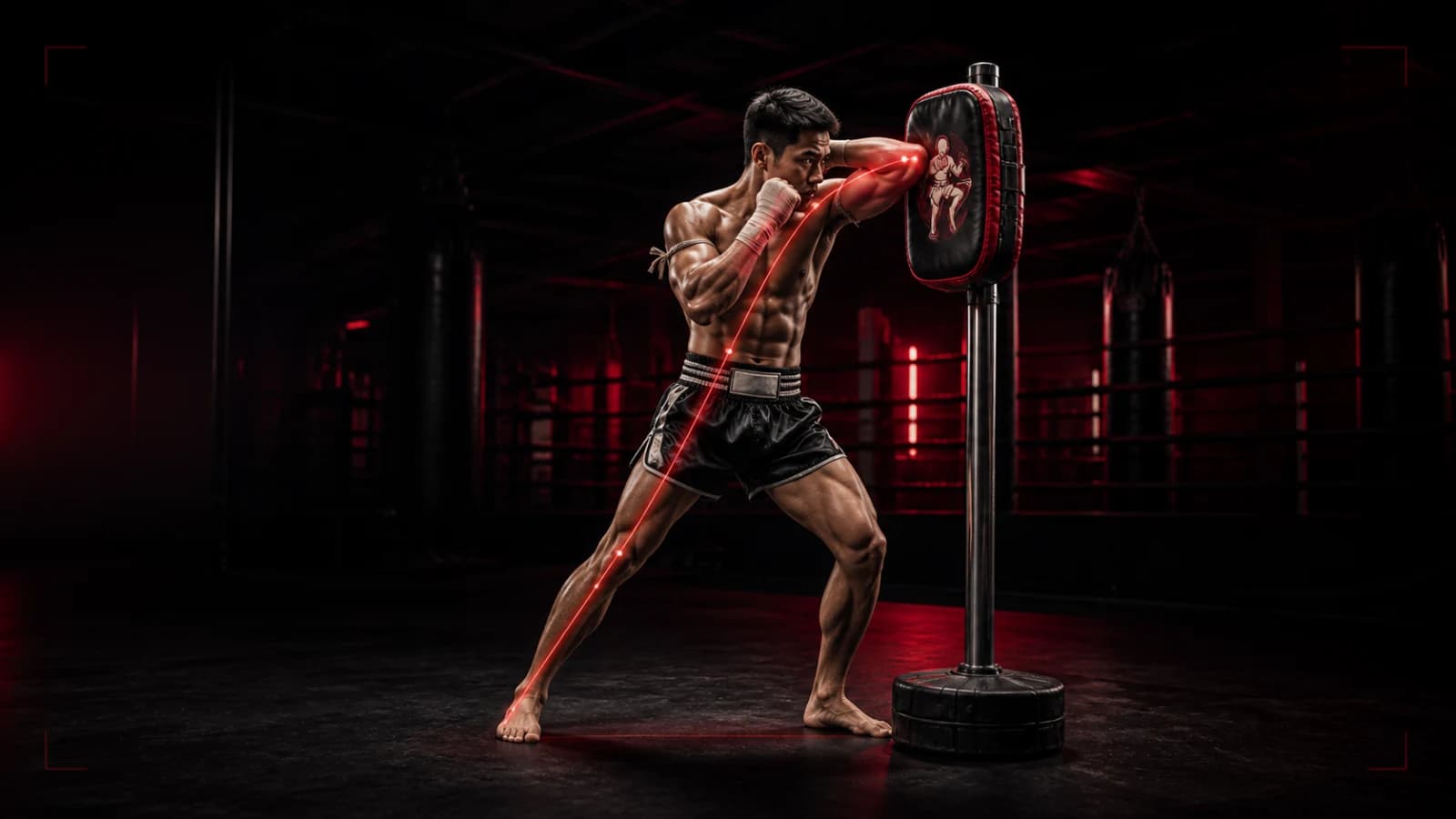
The main Muay Thai elbow paths include horizontal, upward, diagonal, downward, and turning variations. Each one needs close-range positioning, a guarded entry, hip and shoulder rotation, the correct contact surface, and an immediate return to stance. Learn the paths on pads with a qualified kru before you use them in partner work.
Do not practise hard elbow contact on another person. Follow your gym’s rules, wear the equipment your coach requires, and use pads or controlled non-contact drills.
Horizontal elbow
Turn the hip and shoulder as the elbow travels across the target line. Keep the forearm folded, the hand relaxed near the chest or guard, and the opposite hand protecting the face.
Do not swing the arm first. Let the feet and hip create the turn, then let the elbow arrive on the line. Finish balanced enough to frame, clinch, or step away.
Upward elbow
Drive the elbow upward through a narrow lane. Use a small bend in the knees and extend through the floor without dropping both hands. Keep the strike compact; a wide scoop exposes the center line.
On pads, the holder should set a clear target and angle. Stop the rep if the elbow slides off the pad or the holder cannot control the target.
Diagonal elbow
Travel upward or downward across the target depending on the variation your coach teaches. Rotate through the torso while keeping the head protected behind the shoulder and free hand.
The diagonal path should not pull you past your feet. Shorten the motion when your chest turns beyond the stance.
Downward elbow
Raise the elbow under control, then bring it down along the coached line. This variation needs careful pad placement and range. Do not practise it toward a partner’s head.
Keep the shoulder and wrist relaxed enough that the elbow, not the forearm or hand, becomes the intended pad contact.
Turning elbow
Turn only when you understand the distance and exit. Look toward the target as early as your coach teaches, keep the non-striking arm organized, and finish in stance rather than continuing to spin.
Practise the foot turn without striking first. Then add a pad at low speed.
| Technique | Review first | Common miss |
|---|---|---|
| Horizontal | Hip and shoulder arrive together | Arm swings before the body |
| Upward | Compact vertical lane | Both hands drop during the dip |
| Diagonal | Balance through rotation | Chest turns past the feet |
| Downward | Controlled range and pad angle | Elbow falls without a guarded entry |
| Turning | Eyes, feet, and exit | Athlete spins past stance |
Enter safely
Elbows belong to close range. Use a jab, frame, clinch position, or coached step to cover the entry. Do not reach with the elbow from kicking range. The reaching motion weakens the strike and leaves you between ranges.
The International Federation of Muaythai Associations rules provide current competition context. Rules vary by age, class, and event, so confirm whether elbows are allowed before any sparring or competition drill.
A safe pad sequence
- Shadow the path without contact.
- Touch the pad slowly and confirm the distance.
- Perform five controlled reps with a full guard return.
- Add one simple entry chosen by your coach.
- Film three reps, review one checkpoint, and repeat.